
How to use the OIR-B1-1802 form, select the right inspector, and submit your results to your carrier for maximum premium reduction.
A wind mitigation inspection is the single most effective step a Palm Beach County homeowner can take after a roof replacement to reduce their annual insurance premium. The inspection documents the structural features of your roof that protect the home in a hurricane — and Florida law requires insurers to apply premium credits for every qualifying feature. On a properly installed roof in Palm Beach County, the combined credits from a wind mitigation report routinely reduce the wind portion of a homeowner’s premium by 20 to 45 percent.
Most homeowners do not get this inspection. Many are never told it exists. This guide covers exactly what the inspection is, what the OIR-B1-1802 form measures, how to find a qualified inspector in Palm Beach County, and how to submit the results to your carrier to capture every dollar of savings you have earned.
What Is a Wind Mitigation Inspection?
Important: Florida’s OIR updated the standardized OIR-B1-1802 form effective April 1, 2026. When scheduling an inspection, confirm your inspector is using the current form version.
A wind mitigation inspection is a formal assessment of your home’s structural resistance to hurricane-force winds, performed by a licensed inspector and documented on Florida’s standardized OIR-B1-1802 form. The form captures seven specific features of your roof and home construction that affect wind performance — and for each qualifying feature, your insurance carrier is required by Florida law to apply a premium credit.
Wind mitigation inspections are separate from standard home inspections. They must be performed by a licensed inspector holding one of the following Florida credentials: General Contractor, Building Contractor, Roofing Contractor, Home Inspector (with the wind mitigation endorsement), Architect, or Professional Engineer. An inspector without one of these credentials cannot produce a legally valid OIR-B1-1802 form.
| Wind Mitigation Inspection: Key Facts | |
| Form | OIR-B1-1802 — Florida Office of Insurance Regulation standardized form |
| Who Can Perform | Licensed FL General Contractor, Roofing Contractor, Home Inspector (wind mitigation endorsed), Architect, or PE |
| Cost | $75–$150 in Palm Beach County (2026) |
| Validity | 5 years — re-inspection required at expiration or after roof replacement |
| Submission | Submit to your insurance carrier within 30 days of inspection for credits to apply |
| Legal Basis | Florida Statute 627.0629 — insurers required to offer discounts for qualifying features |
The OIR-B1-1802 Form: What Gets Measured and Why It Matters
The OIR-B1-1802 form assesses seven structural attributes. Each one is rated independently, and the credits compound — qualifying for multiple attributes produces larger combined savings than any single feature alone. Here is what each section measures and what qualifies for a credit in Palm Beach County.
1. Building Code — Year of Construction
Homes built to the 2001 Florida Building Code or later receive a base credit reflecting modern wind-resistance standards. Homes built before 2001 do not receive this credit automatically, but upgrading the roof system to current code standards can qualify the home for individual attribute credits that effectively replicate it.
2. Roof Covering
The primary roofing material is assessed against Florida Product Approval standards. A roof covering with a current FPA listing and — for high wind jurisdictions in Palm Beach County — a Miami-Dade NOA qualifies for the maximum roof covering credit. Materials without a current FPA listing receive no credit. This is the single most important reason to verify FPA documentation before your roof replacement: non-compliant materials cost you this credit permanently until the roof is replaced again.
3. Roof Deck Attachment
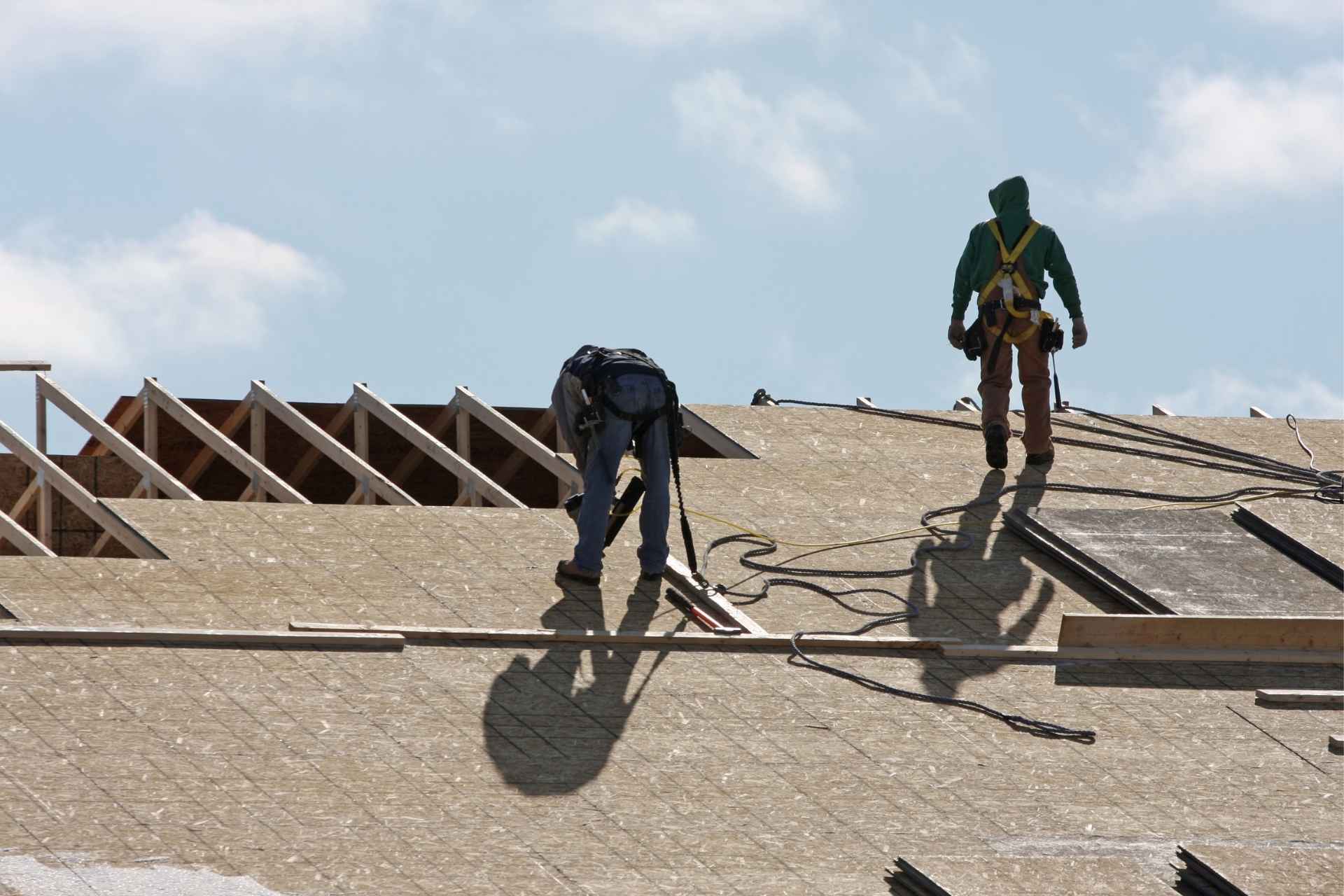
The inspector assesses how the roof deck (typically plywood or OSB) is fastened to the rafters or trusses. Attachment patterns using 8d ring-shank nails at 6-inch spacing in the field and 4-inch spacing at edges and ridges qualify for the highest credit. Homes with older 6d smooth-shank nails at wider spacing receive a lower or no credit. A roof replacement is the best opportunity to upgrade deck attachment to the qualifying standard.
4. Roof-to-Wall Attachment
This is often the largest single credit on the form. The inspector assesses how the roof structure connects to the wall system — ranging from toe-nails (lowest credit) to single hurricane clips to double wraps (highest credit). In Palm Beach County, homes built after 1994 typically have single hurricane clips at minimum. Homes built before 1994 — which includes most of West Palm Beach’s historic districts — often have toe-nail connections that qualify for little or no credit. Upgrading to double wraps during a re-roof is possible and produces measurable insurance savings.
5. Roof Shape
Roof geometry is one of the most impactful credits on the form — and one of the few homeowners cannot change without major renovation. Hip roofs (where all four sides slope down to the walls) qualify for the maximum roof shape credit, reducing wind premiums by 5–15% on this attribute alone — though combined credits across all qualifying attributes can reach 20–45% total. Flat roofs and gable roofs receive no credit. This is why El Cid’s Mediterranean Revival hip roofs and Northwood’s Mission-style hip configurations are so valuable from an insurance standpoint — they qualify automatically.
If your home has a hip roof, this credit alone justifies the cost of the wind mitigation inspection. A $100 inspection that qualifies for multiple combined credits on a $8,000 annual wind premium can save $800–3,600 per year — every year the report is valid.
6. Secondary Water Resistance (SWR)
The inspector verifies whether a secondary water barrier was installed — typically a self-adhered underlayment applied to the roof deck beneath the primary roofing material. Under FBC 2023, self-adhered synthetic underlayment is required in high wind jurisdictions. Homes with a qualifying SWR receive a credit of 5–10% on the wind premium. This is automatically satisfied on any roof replacement performed to current code in Palm Beach County.
7. Opening Protection
The final section assesses how the home’s windows, doors, and garage doors are protected against wind-borne debris — rated as Basic (no protection), Hurricane Panels, or Impact-Rated (the highest credit). Opening protection credits compound with roof credits. A home with a qualifying new roof, hip configuration, and impact-rated windows can achieve total premium reductions of 40–50% on the wind coverage portion.
Wind Mitigation Credit Summary: What to Expect in Palm Beach County
| Credit Type | Qualifying Condition | Typical Premium Reduction |
| Roof Covering (FPA compliant) | Current FPA with high wind rating | 5–15% |
| Roof Deck Attachment | 8d ring-shank, 6″/4″ spacing | 5–10% |
| Roof-to-Wall (Double Wrap) | Double wrap hurricane clips | 5–15% |
| Roof Shape (Hip) | Full hip configuration | 5–15% |
| Secondary Water Resistance | Self-adhered underlayment | 5–10% |
| Opening Protection (Impact) | All openings impact-rated | 10–25% |
Credits are applied to the wind portion of your premium, not the total premium. In coastal Palm Beach County, the wind portion typically represents 50–70% of total homeowner’s insurance cost — making these credits proportionally more impactful than they appear on paper.
How to Find a Qualified Wind Mitigation Inspector in Palm Beach County
The OIR-B1-1802 form is only legally valid when completed by an inspector holding a qualifying Florida license. Verify any inspector’s credentials before scheduling.
- Verify the inspector holds one of the qualifying licenses: Florida General Contractor (CGC), Roofing Contractor (CCC), Home Inspector with wind mitigation endorsement (HI), Architect (AR), or Professional Engineer (PE). Verify at myfloridalicense.com.
- Ask specifically whether they photograph all seven OIR-B1-1802 attributes during the inspection. Inspectors who skip the attic (required to assess deck attachment and roof-to-wall connections) produce incomplete reports that carriers can reject.
- Request sample reports from previous Palm Beach County inspections. A well-documented OIR-B1-1802 includes clear photographs of the deck fastening pattern, hurricane clip type, and underlayment installation — not just checked boxes.
- Confirm turnaround time. Most Palm Beach County wind mitigation inspectors deliver completed reports within 3–5 business days. You need the report in hand before contacting your carrier.
- Cost: $75–$150 for a residential inspection in Palm Beach County as of 2026. Be cautious of inspectors pricing significantly below this range — thorough attic access inspections take time, and cut-rate pricing often reflects cut-rate documentation.
How to Submit the OIR-B1-1802 to Your Insurance Carrier
The inspection itself produces the savings only if submitted correctly and on time. Here is the submission process.
- Receive the completed OIR-B1-1802 report from your inspector. Review it immediately — confirm all seven sections are completed and all photographs are legible. An incomplete form will be rejected by your carrier.
- Submit to your carrier within 30 days of the inspection date. Most carriers accept submission by email, through their agent portal, or by certified mail. Confirm your carrier’s preferred submission method before sending.
- Request written confirmation of receipt. Do not assume the carrier received and processed the report. Follow up within 10 business days if you have not received confirmation.
- Request an updated declarations page reflecting the applied credits. The credits should appear on your next renewal — if they do not, contact your carrier directly and reference the submission confirmation.
- Store the original report. Wind mitigation reports are valid for 5 years. Keep the original for the duration — your carrier may request it again at renewal, and you will need it if you switch carriers within the validity period.
Citizens Property Insurance Corporation — the state-backed insurer covering many Palm Beach County homeowners — applies wind mitigation credits at the policy renewal following submission. If you submit mid-term, the credit typically applies at next renewal, not immediately. Private carriers vary — some apply credits immediately upon receipt.
When to Get a Wind Mitigation Inspection
- Immediately after any roof replacement — this is the highest-value timing. New FPA-compliant materials, upgraded deck attachment, and verified secondary water resistance all appear on the form and produce the largest available credits.
- When purchasing a home in Palm Beach County — the seller’s existing report (if within 5 years) transfers with the property. If no report exists, order one before or immediately after closing.
- Every 5 years — reports expire and must be renewed. If your roof has not changed, re-inspection is straightforward. If you have made improvements (new windows, upgraded hurricane clips), re-inspection captures those credits.
- After any structural upgrade — new impact windows, garage door replacement, or hurricane clip upgrades all affect the form. Re-inspect after any qualifying improvement to capture the credits.
Related Guides
- Roof Replacement in the Historic Northwood District of West Palm Beach — COA process, approved materials, permit sequence, and insurance implications for Northwood homeowners.
- Roof Replacement in El Cid, West Palm Beach — wind mitigation considerations for large Mediterranean Revival estates with Intracoastal exposure.
- How to Read a Florida Product Approval Certificate — verify FPA and Miami-Dade NOA listings before signing any contractor agreement.
The Bottom Line
A wind mitigation inspection costs $75–$150 and takes less than two hours. On a Palm Beach County home with a qualifying roof, hip configuration, and current FPA-compliant materials, the resulting combined insurance credits routinely save $800–$3,600 per year — every year the report is valid. Over the 5-year validity period, that is $4,000–$18,000 in cumulative premium savings from a single inspection.
The best time to schedule it is within 30 days of your roof replacement completion, while the contractor documentation is fresh and your insurer can begin processing credits at the next renewal cycle.



Leave A Comment