
A rider heads home across the Flagler Memorial Bridge approach. A sedan changes lanes without looking. The ambulance ride, the imaging, the orthopedic follow-up: all of it may rest on one assumption, namely that no-fault insurance pays first. In West Palm Beach, that assumption usually fails for a motorcyclist.

A rider traveling through downtown West Palm Beach, where standard automobile no-fault benefits do not apply to motorcycles.
Florida PIP generally does not cover a rider or passenger injured while occupying a motorcycle in West Palm Beach. Under the state’s no-fault rules, only vehicles with four or more wheels count as motor vehicles for PIP purposes, so a policyholder’s car PIP ordinarily won’t cover injuries sustained on a motorcycle.
That gap does not leave you without options. Motorcycle medical payments coverage, health insurance, the at-fault driver’s liability coverage, and uninsured motorist coverage may all apply. The real question is which policy responds and what you must prove under its terms.
Why Does Florida PIP Usually Exclude Motorcycle Crashes?
Florida’s no-fault system sorts vehicles by wheel count. Under Fla. Stat. § 627.732, a “motor vehicle” generally means a self-propelled vehicle with four or more wheels, so motorcycles fall outside the definition. Owners of qualifying vehicles must then maintain Personal Injury Protection under Fla. Stat. § 627.733. Florida requires no-fault medical and disability benefits for covered automobiles, not motorcycles.

Where PIP does apply, Fla. Stat. § 627.736 generally pays 80% of necessary medical costs and 60% of lost income, within statutory conditions and limits. Treatment must generally begin within 14 days. Benefits may be capped at $2,500 unless an authorized provider determines the injured person had an emergency medical condition, which can open the full $10,000 limit. None of that applies to someone hurt while occupying a motorcycle.
The 14-day window and the emergency-medical-condition threshold govern otherwise eligible PIP claims. They cannot turn a motorcycle loss into a covered PIP event.
Once that automatic benefit is gone, the early financial burden lands on other policies right away. The interaction between motorcycles and Florida’s Personal Injury Protection framework has a practical consequence: treatment decisions and billing start in the first two weeks after a crash, long before any liability claim resolves. “No PIP” and “no coverage” are two very different conclusions. Riders lose the automatic benefit, not every route to payment.
Does Car PIP Cover Motorcycle Accidents in Florida?
Usually no. PIP attached to your car policy generally does not pay for injuries you sustain while occupying a motorcycle, even when the car and motorcycle sit in the same household.
Coverage turns on statutory eligibility and the policy’s terms. The coverage does not follow a named policyholder into every vehicle that person occupies. Ultimately, the vehicle involved and the policy language control, not whose name appears on the declarations page.
A rider who owns a separately insured car with PIP ordinarily cannot use that PIP for injuries suffered on a motorcycle. A spouse’s or parent’s household auto policy faces the same limitation. Borrowing the motorcycle does not change its classification. And being struck by a car while still occupying the motorcycle does not transfer that car’s PIP benefits to the rider, though the driver’s bodily injury liability coverage may become relevant.
PIP on a household automobile is statutory no-fault coverage tied to a qualifying four-wheeled vehicle. Optional medical payments coverage, commonly called MedPay, may be purchased for a motorcycle and may cover motorcycle-related injuries. Two separate coverages, two separate sets of terms.
Before assuming a household policy applies, gather its declarations pages, endorsements, exclusions, and any written coverage decision. Endorsements can modify standard policy terms, so a policy-specific review is essential.
What Can Pay Medical Bills When Motorcycle PIP Does Not Apply?
Four potential sources may help pay motorcycle-related medical bills: motorcycle MedPay, health insurance, the at-fault party’s bodily injury liability coverage, and underinsured or uninsured motorist coverage. Bodily injury liability covers injuries caused by an insured at-fault driver. Uninsured or underinsured motorist coverage, often abbreviated as UM/UIM, may protect an insured when the at-fault driver carries no insurance or too little.
MedPay and health insurance
Motorcycle MedPay is optional contractual coverage. Under many policies, it pays covered medical expenses up to the purchased limit without requiring proof that another driver was negligent. Exclusions and the definition of a covered person still apply. Health insurance pays according to its own network rules, deductibles, copayments, and reimbursement provisions.
A health plan may hold subrogation or reimbursement rights, meaning it can seek repayment from a later injury settlement when its documents and applicable law permit. Because those rights vary, request the plan’s reimbursement terms before distributing settlement proceeds.
Liability and uninsured motorist claims
Bodily injury liability coverage generally requires proof of legal responsibility and stays subject to the available policy limits. When the responsible driver is uninsured or underinsured, UM/UIM coverage may respond if the rider qualifies as an insured under a policy covering the loss. Under Fla. Stat. § 627.727, UM coverage may be rejected or selected at lower limits in writing, so it does not appear at the same level in every policy.
| Potential source | Must another party be at fault? | Main limitation to verify
|
|---|---|---|
| Motorcycle MedPay | Usually no | Purchased limit, exclusions, and covered persons |
| Health insurance | No | Deductible, network rules, and reimbursement rights |
| At-fault party’s bodily injury liability | Yes | Fault evidence and liability limits |
| UM/UIM coverage | Yes | Insured status, selected limits, and policy terms |
Can a Motorcycle Passenger Receive PIP Benefits in Florida?
A passenger injured while occupying a motorcycle generally does not receive Florida PIP benefits merely because the passenger, or someone in the passenger’s household, owns an insured car.
Passenger status does not transform a motorcycle into a covered four-wheeled motor vehicle. The statutory definition looks at the vehicle involved, not the occupant’s insurance history. Passengers must therefore look elsewhere.
MedPay on the motorcycle policy may cover passengers if the policy includes them as covered persons. A negligent driver’s bodily injury liability coverage may pay for injuries that driver caused. A passenger may also have a claim against the motorcycle operator if the operator’s negligence contributed to the crash. UM/UIM coverage may help when the passenger qualifies as an insured under an applicable policy, and health insurance remains available under its own terms.
One wrinkle: a person who had dismounted before being struck may face a separate PIP analysis, because that person’s legal status at the moment of injury may have changed.
How Do Fault and Florida’s “51% Rule” Affect a Rider’s Claim?
Florida no-fault PIP benefits do not cover injuries sustained while operating or occupying a motorcycle because motorcycles are excluded from the statutory definition of a covered motor vehicle, so fault is irrelevant to PIP coverage. It does determine whether, and how much, a rider may recover through a negligence or UM claim.
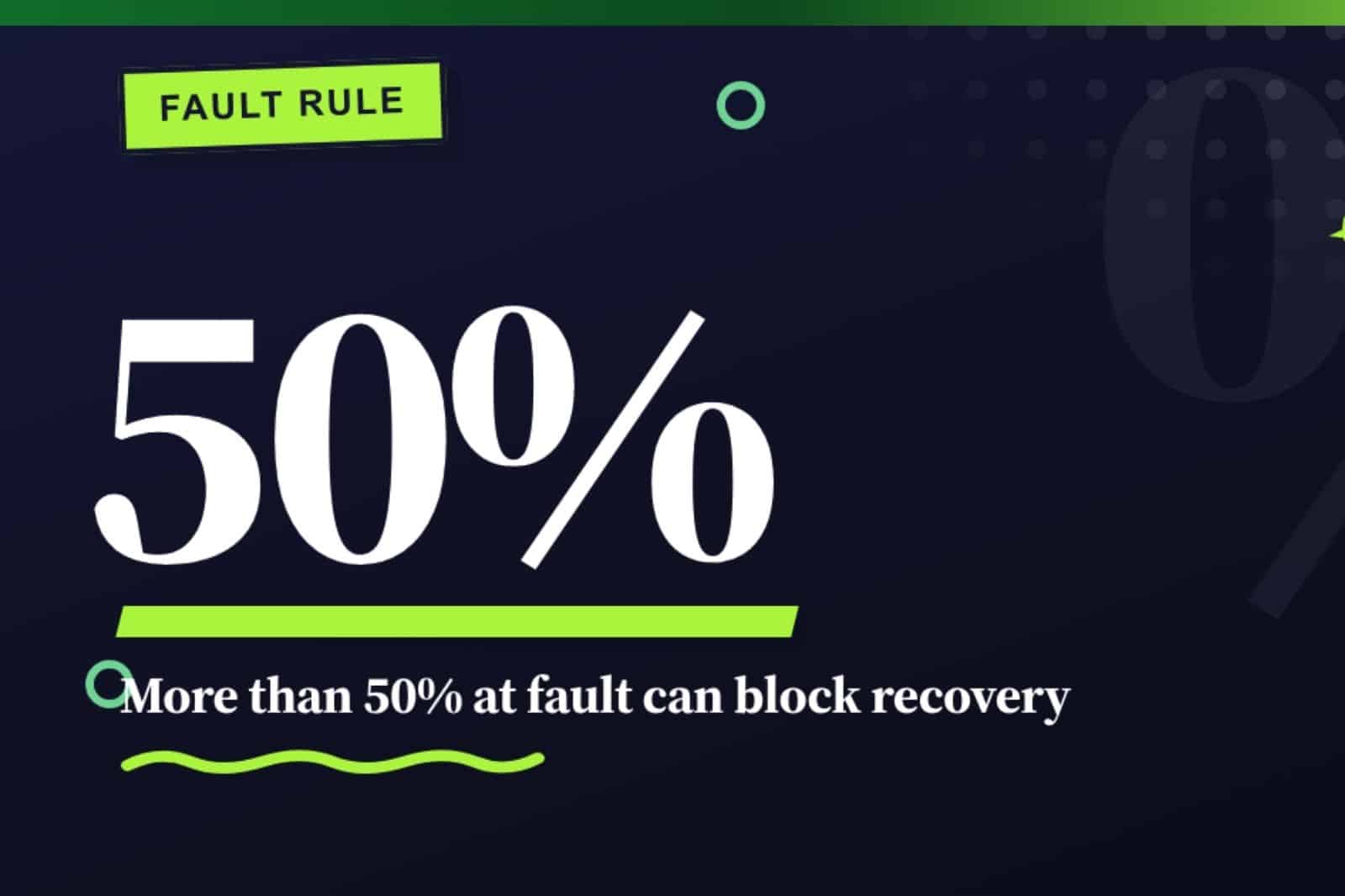
Stat. § 768.81. In negligence actions covered by the statute, damages are reduced by the claimant’s percentage of fault. A claimant found more than 50% at fault generally cannot recover.
Run the numbers. If damages are $100,000 and the rider is 25% at fault, recovery before policy limits and other adjustments may fall to $75,000. At 51% fault, the rule may bar recovery in a covered negligence action entirely.
Exceptions and other claim types can change the analysis, so these percentages describe the general rule, not a guaranteed result.
What Records Should You Preserve After a West Palm Beach Motorcycle Crash?
Preserve the crash report, insurance policies and correspondence, scene evidence, medical records, proof of income loss, and identifying information for drivers, owners, passengers, and witnesses. A West Palm Beach crash file should contain:
- The full crash report and exchange-of-information form
- Photographs or video of the vehicles, helmets, roadway markings, traffic controls, injuries, and debris
- Contact and insurance details for each driver and vehicle owner
- Names and contact details for witnesses
- Motorcycle and household auto declarations pages, endorsements, exclusions, and UM selection or rejection forms
- Medical bills, records, prescriptions, referrals, and health insurance explanations of benefits
- Pay records, missed-work documentation, and self-employment income records
- Repair estimates, towing records, damaged riding gear, and electronic evidence such as camera footage or app data
- All insurer letters, emails, recorded-statement requests, and coverage decisions
Keep damaged gear and motorcycle components in their post-crash condition until they can be inspected or you receive qualified guidance about preserving them.
Nearby business or traffic footage may be overwritten quickly, so a preservation request is time-sensitive. Depending on where the crash occurred, the investigating agency may be a municipal police department, the Palm Beach County Sheriff’s Office, or the Florida Highway Patrol. Request the report from the agency that handled the scene.
Common Questions About Florida Motorcycle Insurance
Does PIP apply to motorcycles registered in Florida?
Generally no. The four-or-more-wheels definition in Fla. Stat. §§ 627.732 and 627.733 controls eligibility. Registering a motorcycle does not make it eligible for PIP benefits.
Is PIP still required for Florida automobiles?
Yes. Florida still requires owners of qualifying registered four-wheeled vehicles to maintain PIP and property damage liability coverage. The FLHSMV outlines the state’s current automobile insurance requirements. Those requirements apply to qualifying automobiles, not motorcycles.
How much no-fault coverage must a Florida driver carry?
An owner of a qualifying vehicle must generally maintain at least $10,000 in PIP coverage, along with the separately required property damage liability coverage. A motorcycle occupant does not receive that benefit merely because a car owner involved in the crash complied with the automobile requirement.
Should a rider consider UM coverage when an auto policy already has PIP?
Yes. The coverages address separate risks. PIP provides limited no-fault benefits for eligible losses, while UM/UIM coverage may respond to damages caused by an underinsured or uninsured at-fault driver. One does not substitute for the other. Availability turns on the applicable policies, insured status, selected limits, and any valid written rejection.
Check the Policies Before the Bills Accumulate
Gather every potentially relevant policy, including household auto policies, and request written coverage decisions rather than telephone assurances. Notify the appropriate insurers promptly, preserve the evidence file, and send early preservation requests for available footage. When coverage or fault is disputed, a licensed Florida insurance professional or qualified Florida attorney can review the endorsements and the facts.
This article provides general information about Florida law and is not legal advice.









Leave A Comment