Florida’s 25% Roofing Rule
A Complete Guide for Palm Beach County Property Owners: What the law actually says, how the 2022 legislative change affects your claim, and the steps that protect your financial position after storm damage.
Florida property owners face one of the most complex roofing regulatory environments in the United States. After every major storm season, a predictable cycle begins: adjusters assess damage, contractors measure affected areas, and disputes emerge over how much of a roof must be replaced versus repaired. At the center of nearly every dispute is a provision known as the 25% Roofing Rule — one of the most frequently misunderstood regulations in Florida building law.
The rule has real financial consequences. On a 2,500 sq ft Palm Beach County home, the difference between a targeted repair and a full roof replacement triggered by the 25% threshold can exceed $30,000. Understanding exactly how the rule works — and when the 2022 legislative exception overrides it — is not optional knowledge for property owners in South Florida. It is financial self-defense.
This guide walks through the statute text, the 2022 legislative change, how the 25% threshold is calculated, what it means for your insurance claim, and the specific steps that protect your position when storm damage hits.
What the 25% Rule Actually Says
The Florida 25% Roofing Rule is not a single law — it is the intersection of a building code provision and a 2022 statutory amendment that partially overrides it. Understanding both is essential because the two govern different situations, and applying the wrong one to your claim produces the wrong outcome.
The Base Rule — Florida Building Code Existing Building §706.1.1
| Florida Building Code – Existing Building, Section 706.1.1 |
| Not more than 25 percent of the total roof area or roof section of any existing building or structure shall be repaired, replaced or recovered in any 12-month period unless the entire existing roofing system or roof section is replaced to conform to the requirements of this code. |
This provision has been embedded in the Florida Building Code for decades. Its original intent was structural resilience: when a significant portion of a roof is replaced, the code requires the entire system to be upgraded to current wind-resistance, fastening, and attachment standards — not just the damaged section.
In practice, this meant that storm damage affecting more than one-quarter of a roof frequently resulted in a full roof replacement. For Palm Beach County homeowners with pre-code roofing systems, a single hailstorm or wind event that damaged 26% of the roof surface could trigger a full replacement requirement worth tens of thousands of dollars beyond the physical damage itself.
| WHAT THIS MEANS | If more than 25% of your roof area or roof section is repaired, replaced, or recovered in any rolling 12-month period — and no exception applies — the entire roofing system or roof section must be brought into compliance with the current Florida Building Code. |
The 2022 Exception — Florida Statute §553.844(5)
In May 2022, during a special legislative session focused on Florida’s property insurance crisis, Governor Ron DeSantis signed Senate Bill 4-D (SB 4-D). Among its provisions, SB 4-D added Subsection (5) to Florida Statute §553.844 — creating a statutory exception that, for qualifying roofs, overrides the full replacement requirement of §706.1.1.
How SB 4-D Changed the Game
| Florida Statute §553.844(5) — Added by SB 4-D, effective May 2022 |
| Notwithstanding any provision in the Florida Building Code to the contrary, if an existing roofing system or roof section was built, repaired, or replaced in compliance with the requirements of the 2007 Florida Building Code, or any subsequent editions of the Florida Building Code, and 25 percent or more of such roofing system or roof section is being repaired, replaced, or recovered, only the repaired, replaced, or recovered portion is required to be constructed in accordance with the Florida Building Code in effect, as applicable. |
The statutory language is precise and intentional. Three conditions must be satisfied for the exception to apply: (1) the existing roofing system or roof section must have been built, repaired, or replaced in compliance with the 2007 Florida Building Code or any subsequent edition; (2) 25% or more of that system or section is being repaired, replaced, or recovered; and (3) no local government ordinance overrides the exception — the statute explicitly prohibits local amendment.
When all three conditions are met, only the repaired portion must comply with the current code. The remainder of the roof is not required to be upgraded. This is the provision that determines whether a storm damage claim triggers a $12,000 repair or a $45,000 full replacement.
| CRITICAL POINT | The §553.844(5) exception does not eliminate the 25% rule — it eliminates the full replacement consequence for roofs built to the 2007 code or later. Pre-2007 code roofs remain fully subject to §706.1.1 and may still face mandatory full replacement when the threshold is exceeded. |
The 2007 Code Benchmark — Why That Date Controls Everything
The 2007 Florida Building Code (FBC) was a watershed moment for Florida roofing standards. It significantly strengthened wind uplift resistance requirements, fastening specifications, secondary water barrier standards, and attachment protocols — the direct response to damage patterns observed after Hurricanes Charley, Frances, Ivan, and Jeanne in 2004 and Katrina, Rita, and Wilma in 2005.
The Florida Building Commission designated March 1, 2009 as the effective date for the 2007 FBC. This is the practical benchmark used by building departments, adjusters, and contractors across Palm Beach County when determining whether a roof qualifies for the §553.844(5) exception.
|
THE PRACTICAL BENCHMARK |
If your roofing permit was issued on or after March 1, 2009, the roof was most likely built to the 2007 Florida Building Code and qualifies for the §553.844(5) exception. If the permit predates March 1, 2009, the roof may not qualify — and the full replacement requirement of §706.1.1 may apply when the 25% threshold is exceeded. |
How to Verify Your Roof’s Code Compliance
Compliance with the 2007 FBC is not assumed based on age alone. It must be verifiable. When a claim is disputed, the burden of demonstrating code compliance typically falls on the property owner or their contractor. The following documentation establishes compliance:
- Roofing permit records: Search your county or municipal building department portal. Palm Beach County permit records are searchable at discover.pbcgov.org. The permit date is the primary indicator.
- Final inspection approval: A completed final inspection on the roof permit confirms the installation was inspected and approved under the applicable code edition.
- Contractor documentation: The installing contractor’s records, including the Florida Product Approval numbers for materials used, support code compliance.
- Wind mitigation report: An existing OIR-B1-1802 wind mitigation report documents roof deck attachment, fastener type, and installation standards — all of which reflect code compliance at the time of installation.
If no permit records exist — a common issue on older Palm Beach County homes with undocumented repairs — a licensed contractor can assess the installation and provide documentation, though the building department retains authority to make the final determination.
How the 25% Threshold Is Calculated
The calculation sounds straightforward. In practice, it produces disputes at nearly every stage of the claims process. Three specific mechanics determine whether a repair crosses the threshold — and each one has generated documented litigation and regulatory clarification in Florida.
The 12-Month Rolling Window
The 25% threshold applies to a rolling 12-month period — not a calendar year. Every repair, replacement, or recovery performed on a roof within any consecutive 12-month window is aggregated when determining whether the threshold has been crossed.
This has a specific and important implication: a homeowner who repairs 20% of their roof after one storm, then sustains additional damage six months later requiring another 10% repair, has exceeded the 25% threshold within the rolling 12-month period — even though each individual repair was below the threshold. Scope decisions made at the time of the first repair directly affect the permissible scope of subsequent repairs.
|
PLANNING IMPLICATION |
When authorizing repairs after storm damage, confirm with your contractor exactly how much of the roof area is being addressed. That measurement starts the rolling clock. A second damage event within 12 months will add to it — and may push the cumulative total above 25%. |
Roof Sections vs. Total Roof Area
The 25% calculation applies to the roof area or roof section — not necessarily the entire building footprint. This distinction is significant for Palm Beach County commercial properties and larger residential estates with structurally distinct roof assemblies.
A building with multiple roof sections — separated by changes in elevation, parapet walls, or different roofing systems — applies the 25% threshold independently to each section. Damage affecting 40% of one section does not aggregate with an unaffected adjacent section. This creates a meaningful difference in how commercial properties calculate threshold exposure versus how the rule applies to a continuous residential roof.
For the majority of SoSo, Northwood, El Cid, and Flamingo Park homes in West Palm Beach — which feature continuous roofing systems — the entire roof area is the relevant measurement unit.
Tie-Off Work Does Not Count Toward the Threshold
In April 2021, the Florida Building Commission issued Declaration DS 2021-007 to resolve a long-running industry dispute. The declaration confirmed that related work required to properly tie repaired areas into unrepaired areas — such as integrating new roofing material with existing at transition zones — does not count toward the 25% threshold.
Only the damaged or replaced roof area itself counts. The transition and integration work necessary to make the repair weathertight and structurally continuous is excluded from the calculation. This clarification meaningfully reduces the effective measured area in many real-world repair scenarios.
Pre-2007 vs. 2007+ Code Roofs — Side by Side
| Factor | Pre-2007 Code Roof | 2007+ Code Roof |
| 25% exceeded? | Full roof section replacement required | Only repaired portion must comply |
| Legal basis | FBC Existing Building §706.1.1 | FL Statute §553.844(5) overrides FBC |
| Permit benchmark | Issued before March 1, 2009 | Issued on or after March 1, 2009 |
| Local override allowed? | Yes — local ordinances may apply | No — statute prohibits local amendment |
| Documentation needed | N/A — full replacement required | Permit records, inspection reports, FPA docs |
| Financial exposure | Full replacement cost + code upgrades | Repair cost only for damaged portion |
What This Means for Storm Damage Claims
The 25% rule and its §553.844(5) exception directly shape how insurance adjusters evaluate storm damage claims in Palm Beach County. Two scenarios produce dramatically different outcomes depending on which provision applies.
When the Exception Works in Your Favor
A 2015 tile roof on an El Cid estate sustains wind damage affecting 35% of the primary roof section during hurricane season. Because the roof was installed after March 1, 2009, it qualifies under §553.844(5). The insurer is required to cover replacement of the damaged 35% — not the full roof. The homeowner’s out-of-pocket exposure is limited to their deductible and any code upgrade costs on the repaired portion.
The Florida Matching Statute (F.S. §626.9744) also activates here: if the replacement tiles do not match the existing tiles in quality, color, or size, the insurer shall make reasonable repairs or replacement of items in adjoining areas to achieve uniformity. On discontinued tile products — a common issue on Palm Beach County properties — this provision can require full roof replacement even when the physical damage is below 50%, because matching is impossible.
When the Full Replacement Rule Still Applies
A 1988 concrete block ranch in SoSo sustains storm damage affecting 28% of its flat roof system. The roof was not replaced after March 1, 2009 — it has been patched repeatedly but never fully replaced under a permit. No documentation establishes 2007 FBC compliance. The §553.844(5) exception does not apply. Under §706.1.1, the entire roof section must be replaced and brought into compliance with the current Florida Building Code. The insurer’s obligation covers the full replacement, subject to policy terms, deductibles, and law and ordinance coverage limits.
Insurance Implications Every Palm Beach County Homeowner Must Understand
The 25% rule is a building code provision — but its consequences land squarely in the insurance claim. Three specific insurance provisions interact with it directly.
Law and Ordinance Coverage
When the 25% threshold triggers code compliance requirements beyond the physical storm damage — upgraded fasteners, secondary water barriers, new deck attachment systems — standard homeowners policies typically cover only the physical damage itself. The additional cost of bringing the roof into code compliance falls on the property owner unless Law and Ordinance coverage is included in the policy.
Law and Ordinance coverage specifically addresses the gap between what physical damage requires and what code compliance requires. For Palm Beach County property owners with pre-2007 code roofs, this coverage is not optional — it is the provision that determines whether a code-triggered replacement is financially manageable. Review your policy’s Law and Ordinance coverage limits before storm season, not after.
The Florida Matching Statute — F.S. §626.9744
|
Florida Statute §626.9744(2) — The Matching Requirement |
|
When a loss requires replacement of items and the replaced items do not match in quality, color, or size, the insurer shall make reasonable repairs or replacement of items in adjoining areas. |
The matching statute is mandatory — not discretionary. When replacement materials do not match the existing roof in quality, color, or size, the insurer shall extend repairs to adjoining areas. The word ‘shall’ is not softened by the statute. Insurers may consider cost, achievable uniformity, and remaining useful life of undamaged portions when determining the scope of matching repairs — but they cannot simply deny the obligation.
For Palm Beach County’s historic districts — El Cid’s clay barrel tile, Northwood’s architectural shingle profiles — discontinued materials trigger the full replacement obligation under §626.9744 far more frequently than in newer neighborhoods. A contractor who identifies a discontinued material at the estimate stage is doing you a significant service — that identification activates the matching obligation before the claim is filed.
| INSURER TACTIC TO KNOW | Some carriers attempt to limit matching obligations through specific policy language. The Florida OIR has rejected attempts to cap matching costs through policy forms. If your carrier denies or limits a matching claim, reference the mandatory ‘shall’ language of §626.9744(2) directly and consider engaging a licensed public adjuster. |
Steps to Take After Storm Damage in Palm Beach County
The sequence of actions taken in the first 48–72 hours after storm damage directly affects claim scope, documentation quality, and financial exposure. These steps apply to every Palm Beach County property owner regardless of roof type or age.
- Mitigate immediately. Authorize temporary tarping or emergency cover to prevent secondary interior water damage. Document the pre-mitigation damage condition thoroughly with photos and video before tarps are installed. Insurance policies require reasonable mitigation — failure to mitigate can reduce or void coverage for subsequent damage.
- Pull your permit history before the adjuster arrives. Search the City of West Palm Beach building portal or Palm Beach County’s discover.pbcgov.org for your last roofing permit. The permit date is the single most important document in determining whether §553.844(5) applies to your claim.
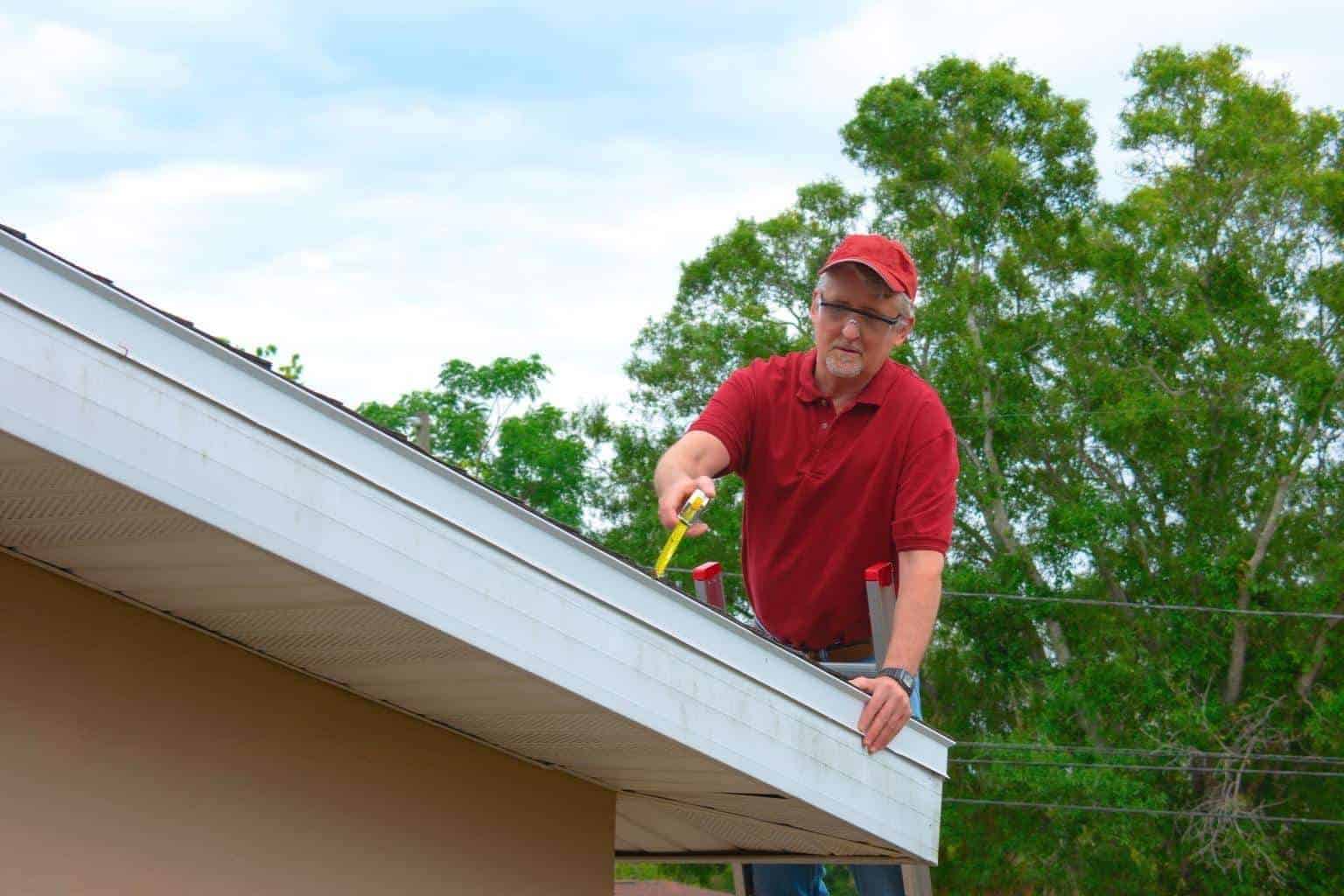
- Commission a scope measurement from a licensed Florida Certified Roofing Contractor. Get the percentage of affected area in writing before authorizing any repairs. This number controls the entire claim. An independent measurement from your contractor, compared against the adjuster’s estimate, surfaces discrepancies before they become disputes.
- Review your policy for Law and Ordinance coverage limits. Locate the Law and Ordinance section of your homeowners policy and confirm the coverage limit. If your roof is pre-2007 code, this number represents your maximum protection against code-upgrade costs beyond physical damage.
- Identify the replacement material and check availability. If the existing material is discontinued or difficult to match, document this before the claim is settled. Material discontinuation is the triggering condition for the full-roof matching obligation under §626.9744(2) — and it must be established during the claim, not after.
- Do not sign a direction to pay or assignment of benefits without review. Contractors who ask homeowners to assign insurance benefits to them take control of the claim. Florida’s SB 2-D (2022) significantly restricted assignment of benefits in roofing claims. Understand what you are signing before authorizing any work.
Frequently Asked Questions — Florida 25% Roofing Rule
Q: Does the 25% rule apply statewide in Florida?
A: Yes. Florida Building Code §706.1.1 is a statewide provision enforced by local building departments. The §553.844(5) exception also applies statewide, and the statute explicitly prohibits local governments from amending or overriding it by ordinance.
Q: Can I split repairs over two calendar years to avoid the 25% threshold?
A: No. The threshold applies to a rolling 12-month period — not a calendar year. Any repair performed within 12 months of a previous repair on the same roof is aggregated. Attempting to schedule repairs to avoid the threshold without disclosing prior repairs to the building department creates permit compliance risk.
Q: My roof was replaced in 2011. Does it automatically qualify for the §553.844(5) exception?
A: A 2011 permit date places the roof after the March 1, 2009 effective date of the 2007 FBC — so it likely qualifies. However, compliance is not automatic. The building department may require documentation confirming the work was permitted and inspected under the 2007 code. Pull the permit records to confirm.
Q: Who decides whether the §553.844(5) exception applies to my claim?
A: The local building department has authority over code compliance determinations. Your insurance adjuster evaluates claim scope based on the applicable code. When the two conflict — and they often do — a licensed public adjuster or roofing attorney can document and advocate for the correct application of the statute.
Q: What is the Florida Matching Statute and how does it affect a partial roof replacement?
A: Florida Statute §626.9744(2) requires insurers to make reasonable repairs or replacement of items in adjoining areas when replaced items do not match in quality, color, or size. For roofing, this means that if the damaged tiles or shingles cannot be matched to the existing materials — particularly if the product is discontinued — the insurer shall extend replacement to achieve uniformity across the roof surface.
Q: Does Law and Ordinance coverage pay for code upgrades required by the 25% rule?
A: Yes — Law and Ordinance coverage specifically addresses the gap between what physical damage requires and what code compliance requires. If the 25% threshold triggers a full replacement with upgraded fastening, secondary water barriers, or deck attachment — costs that exceed the physical damage — Law and Ordinance coverage pays that gap up to its policy limit. Review your coverage limit before storm season.
Related Guides for Palm Beach County Property Owners
- Roof Replacement in the Historic Northwood District of West Palm Beach — COA process, approved materials, and permit sequence for Northwood homeowners.
- Roof Replacement in El Cid, West Palm Beach — historic preservation requirements and insurance considerations for high-value Mediterranean Revival estates.
- Roof Replacement in SoSo (South of Southern), West Palm Beach — flat and low-slope roof replacement for mid-century concrete block homes.
- How to Read a Florida Product Approval Certificate — verify FPA listings before signing any contractor agreement.
- Wind Mitigation Inspections in Palm Beach County — how to document your new roof for maximum insurance premium reduction.
The Bottom Line
Florida’s 25% Roofing Rule remains active law across every Palm Beach County municipality. What changed in 2022 is the consequence — for roofs built to the 2007 Florida Building Code or later, exceeding the 25% threshold no longer automatically triggers a full roof replacement. Only the repaired portion must comply with the current code.
The rule that controls your claim is determined by a single data point: your roof’s permit date. A permit issued on or after March 1, 2009 likely qualifies for the §553.844(5) exception. A permit before that date likely does not. Pull that record now — before storm season, before a claim, before a dispute — so the answer is in your hands when it matters.
Documentation, permit history, and a licensed contractor who understands Palm Beach County’s building department requirements are the three assets that determine whether a storm damage event costs you a repair or a full replacement.
Sources: Florida Building Code – Existing Building §706.1.1 · Florida Statute §553.844(5) (SB 4-D, 2022) · Florida Statute §626.9744 · Florida Building Commission Declaration DS 2021-007 · Florida Senate Bill Archive · floridabuilding.org · discover.pbcgov.org
Citations (For Verification Purposes)
-
Florida Building Code – Existing Building §706.1.1
Florida Building Commission
https://www.floridabuilding.org -
Florida Statute §553.844(5) (Roofing; compliance; 2022 amendment via SB 4-D)
The Florida Senate
https://www.leg.state.fl.us/Statutes/index.cfm?App_mode=Display_Statute&URL=0500-0599/0553/Sections/0553.844.html -
Senate Bill 4-D (2022 Special Session)
Florida Senate Bill Archive
https://www.flsenate.gov/Session/Bill/2022D/4D -
Florida Matching Statute – F.S. §626.9744
The Florida Senate
https://www.leg.state.fl.us/statutes/index.cfm?App_mode=Display_Statute&URL=0600-0699/0626/Sections/0626.9744.html -
Florida Building Code Effective Dates (2007 FBC effective March 1, 2009)
Florida Building Commission
https://www.floridabuilding.org - Luxe Builder Group – GAF Certified Roofer in Palm Beach County
Best Roofing Company in Palm Beach County
https://clematisstreet.org/luxe-builder-group/